
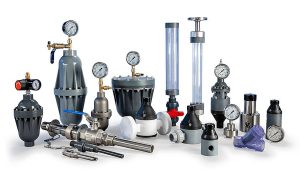
Fluid handling systems are intricate networks designed to move liquids with precision and control. While pumps are the workhorses of these systems, a variety of accessories are essential for ensuring they operate efficiently and safely. Among the most critical of these is the back pressure valve. Often misunderstood by those new to fluid handling, this simple yet powerful device plays a fundamental role in maintaining system integrity. So, what exactly is a back pressure valve, and why is it so important? This guide aims to answer those questions and more.
What is a Back Pressure Valve?
A back pressure valve is a type of control valve designed to maintain a preset pressure on its upstream side. Unlike a pressure relief valve, which opens to release excess pressure, a back pressure valve is always at work. Its purpose is to create a constant pressure against the flow of fluid. This consistent resistance is crucial for many applications, particularly those involving metering pumps. Without a back pressure valve, a metering pump’s performance can become erratic and unpredictable, leading to inaccurate dosing and system inefficiency. This is the first step in demystifying back pressure valves.
How a Back Pressure Valve Works
At its core, a back pressure valve functions based on a simple principle: a spring-loaded diaphragm or piston that resists the fluid flow. The valve remains closed until the pressure in the system’s upstream line exceeds the spring’s tension. Once the pressure reaches the preset level, the valve begins to open, allowing a controlled amount of fluid to pass through. As the pressure drops, the spring forces the valve to close again. This continuous cycle of opening and closing maintains a stable and consistent pressure, ensuring that the pump is always operating against a predictable force. Therefore, this mechanism is key to understanding how back pressure valves support system stability.
Why You Need a Back Pressure Valve
Back pressure valves are not just a luxury; they are a necessity in many fluid handling scenarios. One of their most important functions is preventing siphoning. Siphoning occurs when gravity pulls a fluid through a system too quickly, causing the pump to lose control over the flow rate. A back pressure valve prevents this by creating the necessary resistance to maintain a full pipe and keep the pump’s discharge line pressurized. This ensures accurate and consistent dosing, which is essential in applications like chemical injection or water treatment.
Another critical role of back pressure valves is improving the accuracy of metering pumps. Metering pumps deliver precise volumes of fluid with each stroke. If there is no consistent pressure for the pump to work against, its discharge volume can vary widely, leading to inaccuracies. By providing a stable pressure environment, a back pressure valve ensures that the pump operates at its peak performance, delivering the exact amount of fluid required with every stroke. This is a fundamental concept in demystifying back pressure valves.
Applications and Benefits
The applications for back pressure valves are vast and varied. They are widely used in chemical feed systems to maintain consistent dosing rates, in agricultural irrigation to ensure uniform fertilizer application, and in industrial processes to prevent line drain-down and maintain a full column of liquid. The benefits of incorporating a back pressure valve into your system are numerous and significant. First, they enhance accuracy and reliability, which leads to better process control and product quality. Then, they protect the pump from damage by ensuring it never runs in a condition of zero pressure. Finally, they contribute to a safer operating environment by preventing unpredictable fluid behavior.
For many years, Griffco Valve has been a leader in manufacturing high-quality accessories for fluid handling systems. We understand the critical role that a well-designed back pressure valve plays in the performance of your entire system. Our experience in supplying accessories for a wide range of applications has given us the expertise to produce products that our customers trust for their quality and reliability. We are committed to providing the right solutions to help you achieve the highest possible standards for your operations.
The science behind back pressure valves may seem complex at first glance, but the principle is straightforward: they create stability in an otherwise dynamic system. By providing a constant resistive force, they empower pumps to perform their job with precision and consistency. This makes them an indispensable part of any fluid handling setup.
Ultimately, understanding the function and importance of a back pressure valve is a key step in mastering the fundamentals of fluid handling. Once you recognize how this small component can dramatically improve your system’s accuracy and reliability, its value becomes undeniably clear. Now that we have completed demystifying back pressure valves, you can make more informed decisions about your fluid handling system.